
For many Muslims, visiting Makkah is a dream that carries deep spiritual meaning. Performing Umrah is the main purpose of the journey, but the experience can become even more memorable when you take time to explore the city’s important Islamic landmarks, historic sites and places connected to the life of Prophet Muhammad (PBUH).
Makkah is much more than the location of Masjid al-Haram and the Holy Kaaba. Its surrounding mountains, historic mosques and significant Islamic locations offer visitors an opportunity to learn more about the history of Islam while strengthening their spiritual connection.
Whether you are planning your first pilgrimage or returning for another visit, knowing which places are worth exploring can help you organise your time more effectively. If you are considering Umrah Packages 2027 from Canada, adding a few historical and religious visits to your itinerary can make your journey more meaningful.
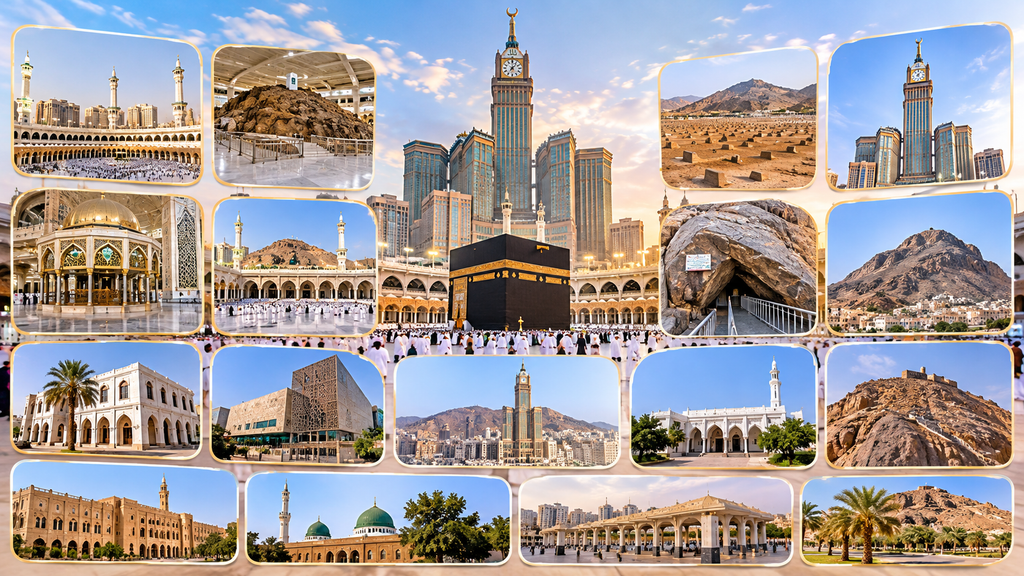
Here are 15 famous places to visit in Makkah during your Umrah trip.
1. Masjid al-Haram
No visit to Makkah is complete without spending time at Masjid al-Haram, the holiest mosque in Islam. It surrounds the Holy Kaaba, towards which Muslims around the world turn during their daily prayers.
The mosque is the heart of every Umrah journey. Pilgrims come here to perform Tawaf, complete Sa’i between Safa and Marwah, offer prayers and make personal duas.
The atmosphere is particularly special during Ramadan, when thousands of worshippers gather for Taraweeh and other prayers. If you want to enjoy a quieter experience, consider visiting at different times of the day rather than limiting your visits to prayer times.
Travel tip: Wear comfortable footwear for walking outside the mosque, stay hydrated and allow enough time for security checks and movement around the Haram.
2. Jabal al-Nour (Mountain of Light)
Jabal al-Nour is one of the most historically significant mountains in Makkah. It is famous for housing the Cave of Hira, where Prophet Muhammad (PBUH) received the first revelation of the Holy Quran through Angel Jibreel (AS).
The mountain stands approximately 642 metres above sea level. Reaching the cave requires a considerable uphill climb, with uneven steps and rocky sections along the route.
Many visitors are interested in seeing the location where the first revelation took place. However, climbing the mountain is not an essential part of Umrah, and it can be physically demanding, particularly during hot weather.
Travel tip: If you decide to visit, choose a cooler time of day, wear suitable walking shoes and carry water. Older visitors and people with mobility difficulties should consider whether the climb is appropriate for them.
3. Cave of Hira
Located on Jabal al-Nour, the Cave of Hira holds an unforgettable place in Islamic history. It was here that Prophet Muhammad (PBUH) received the first verses of Surah Al-Alaq.
The cave is relatively small, but its historical and spiritual significance makes it one of the most recognised locations in Makkah.
Visitors often climb Jabal al-Nour specifically to see this important site and reflect on the beginning of the Prophet’s mission.
It is worth remembering that visiting the cave is not a required Umrah ritual. You should approach the visit as an opportunity to learn about Islamic history rather than treating it as an additional act of worship.
4. Jabal Thawr and the Cave of Thawr
Jabal Thawr is another important mountain associated with the life of Prophet Muhammad (PBUH). It is famous for the Cave of Thawr, where the Prophet and Abu Bakr (RA) took shelter during their migration from Makkah to Madinah.
This event is mentioned in Surah At-Tawbah (9:40), highlighting the trust and protection of Allah during a difficult moment in Islamic history.
The mountain is located south of central Makkah. Like Jabal al-Nour, reaching the cave involves a challenging climb and requires good physical fitness.
Travel tip: You can appreciate the historical importance of Jabal Thawr without climbing it. Viewing the mountain from a suitable nearby location is a more comfortable option for many families and elderly pilgrims.
5. Jannat al-Mu’alla Cemetery
Jannat al-Mu’alla is one of the oldest and most historically significant Muslim cemeteries in Makkah.
It is associated with several important figures from early Islamic history, including Khadijah bint Khuwaylid (RA), the beloved wife of Prophet Muhammad (PBUH), and other members of his family.
The cemetery offers visitors an opportunity to reflect on life, death and the sacrifices made by the early Muslim community.
Access arrangements can vary, so visitors should follow local instructions and respect the site’s rules.
6. Masjid al-Jinn
Masjid al-Jinn is a historic mosque in Makkah associated with an important event mentioned in the Quran.
According to Islamic tradition, a group of jinn listened to the Prophet Muhammad (PBUH) reciting the Quran and accepted its message. The event is associated with the opening verses of Surah Al-Jinn.
The mosque is located near Jannat al-Mu’alla and is often included in historical sightseeing tours around Makkah.
It is a relatively short visit, making it a convenient stop for pilgrims who want to explore more of the city’s Islamic heritage.
7. Masjid Aisha (Masjid al-Taneem)
Masjid Aisha, also known as Masjid al-Taneem, is one of the most well-known mosques near Makkah.
It is associated with an occasion when Aisha (RA) entered into Ihram from this location for Umrah, following guidance from Prophet Muhammad (PBUH).
Today, the mosque is frequently visited by people who are already in Makkah and intend to perform another Umrah. It provides facilities for pilgrims to prepare and enter Ihram.
Travel tip: If you are planning an additional Umrah, ask a knowledgeable scholar or your group guide about the correct procedure. Do not assume that visiting the mosque itself is necessary for every pilgrim.
8. Mina
Mina is a significant location in the Hajj pilgrimage, situated a short distance east of central Makkah.
It is famous for its enormous tent city, where Hajj pilgrims stay during important days of the pilgrimage. The area also contains the Jamarat complex, where pilgrims perform the symbolic stoning ritual during Hajj.
Although Mina is mainly associated with Hajj rather than Umrah, visiting the area can help you understand the wider significance of the pilgrimage in Islam.
During Hajj, access and movement are controlled for safety reasons. Visitors should follow the instructions of local authorities and avoid entering restricted areas.
9. Mount Arafat (Jabal al-Rahmah)
Mount Arafat, also known as Jabal al-Rahmah or the Mountain of Mercy, is one of the most important locations associated with Hajj.
It is situated outside central Makkah and is famous for being part of the Day of Arafah, when Hajj pilgrims gather on the plain of Arafat to pray and seek forgiveness.
The location is also traditionally associated with important events in Islamic history.
For Umrah visitors, Arafat can be an interesting historical excursion. However, it is important to understand that standing at Arafat is an essential pillar of Hajj, not Umrah.
10. Muzdalifah
Muzdalifah is another important location on the Hajj route, situated between Arafat and Mina.
During Hajj, pilgrims spend part of the night here after leaving Arafat. They also collect pebbles for the symbolic stoning ritual performed at Mina.
The open landscape and its connection to the Hajj pilgrimage make Muzdalifah an important place to understand the wider journey of Islamic worship.
If you are visiting Makkah for Umrah, you can explore the area when access is permitted. However, there are no additional Umrah rituals that need to be performed here.
11. Hudaibiyah (Al-Hudaybiyyah)
Al-Hudaybiyyah is a historically important location outside Makkah, associated with the Treaty of Hudaybiyyah between Prophet Muhammad (PBUH) and the Quraysh.
The treaty took place in 6 AH and became a significant turning point in Islamic history. Although the agreement initially appeared difficult for Muslims, it eventually opened the way for greater opportunities to spread Islam peacefully.
Many visitors include the area in historical tours because of its connection to the early Muslim community.
The location is also associated with the beginning of the events leading to the Treaty of Hudaybiyyah, making it an interesting destination for anyone interested in Islamic history.
12. Hira Cultural District
The Hira Cultural District is a modern cultural destination developed near Jabal al-Nour.
It provides visitors with an opportunity to learn about the historical significance of the Cave of Hira and the first revelation through exhibitions and educational experiences.
The district includes the Revelation Exhibition, which explores the story of the first revelation and its importance in Islamic history.
Unlike climbing the mountain, visiting the cultural district can be a more accessible experience for families and visitors who prefer an educational activity.
Travel tip: Check the latest opening hours, ticket requirements and visitor arrangements before travelling.
13. Abraj Al Bait Clock Tower
The Abraj Al Bait Clock Tower is one of the most recognisable modern landmarks in Makkah.
Located directly opposite Masjid al-Haram, this impressive complex features the famous clock tower, shopping areas, restaurants and hotels.
Its convenient location makes it a popular stop for pilgrims who want to shop, enjoy a meal or purchase gifts for family and friends.
The upper sections of the tower also offer observation experiences when available, providing views of the surrounding city and the Grand Mosque.
For many visitors, the Clock Tower is especially beautiful in the evening when its illuminated clock face can be seen from different parts of Makkah.
14. The Kiswah Factory (King Abdulaziz Complex for the Holy Kaaba Kiswa)
One of the most fascinating places associated with the Holy Kaaba is the King Abdulaziz Complex for the Holy Kaaba Kiswa.
This specialised complex is responsible for producing the beautiful black cloth that covers the Kaaba. The Kiswah is decorated with Quranic verses embroidered using gold and silver-plated threads.
Visitors interested in Islamic craftsmanship can learn about the detailed work, materials and traditional techniques involved in creating the Kiswah.
The facility is not an ordinary walk-in tourist attraction. Visits may require advance arrangements, official permission or a booking, depending on the current visitor policy.
If you are interested in visiting, check the official arrangements before including it in your itinerary.
15. Makkah Museum
For visitors who enjoy learning about history and culture, Makkah Museum is another worthwhile destination.
The museum showcases aspects of Makkah’s history, Islamic heritage, traditional architecture and cultural development.
Its collections and exhibitions provide a different perspective on how the city has changed over time while maintaining its central importance in Islam.
It can be a useful addition to your sightseeing plans, particularly if you want to understand more about the city’s history beyond the main religious landmarks.
Check its current opening arrangements before visiting, as access and operating hours may change.
How to Plan Your Makkah Sightseeing During Umrah
Visiting these locations can make your Umrah journey more educational and memorable, but planning is important. Many pilgrims underestimate the time required for worship, rest and travelling between different parts of the city.
Here are some practical suggestions:
1. Prioritise your Umrah: Your main purpose is to perform Umrah and worship. Plan sightseeing around your prayers, rest and other religious commitments.
2. Choose cooler visiting hours: Mountain locations such as Jabal al-Nour and Jabal Thawr can be physically demanding. Avoid climbing during the hottest part of the day.
3. Arrange reliable transportation: Some historical sites are located outside the central Haram area. A reliable taxi or organised group transport can save time and make your journey easier.
4. Respect local regulations: Some religious and historical locations have restricted access or specific visitor arrangements. Always follow official instructions.
5. Allow time for rest: Umrah can involve considerable walking, especially for first-time visitors. Avoid filling every day with sightseeing activities.
6. Travel with suitable guidance: A knowledgeable guide can explain the historical background of different locations and help you understand their significance.
Planning Your Umrah from Canada in 2027
If you are planning your pilgrimage from Canada, it is worth starting your preparations well in advance. Choosing suitable accommodation, flights and transport can make a significant difference to your overall experience.
When comparing Umrah Packages 2027 from Canada, consider more than just the advertised price. Look at the hotel’s distance from Masjid al-Haram, flight connections, meal arrangements, transport services and the level of assistance provided by the travel agency.
You should also understand the requirements for a Saudi Umrah Visa before finalising your travel arrangements. Visa eligibility, application procedures and entry conditions can change, so always check the latest requirements through official Saudi government channels or an authorised travel provider.
For Canadian travellers, a few important considerations include:
- Check passport validity and applicable visa requirements before booking.
- Compare hotels based on their actual walking distance from the Haram.
- Confirm whether airport transfers and intercity transportation are included.
- Ask whether the package includes a guided Ziyarah tour.
- Consider your travel dates carefully, especially if you plan to visit during Ramadan or peak travel periods.
- Make sure you understand the cancellation and refund policies before paying.
A well-organised package can help you spend less time worrying about travel arrangements and more time focusing on your spiritual journey.
Final Thoughts
Makkah is a city filled with spiritual significance and Islamic history. From the sacred surroundings of Masjid al-Haram to the historic mountains of Jabal al-Nour and Jabal Thawr, every location offers a different opportunity to learn about Islam and the life of Prophet Muhammad (PBUH).
Although visiting all 15 places may not be possible during a short Umrah trip, selecting a few that interest you can make your stay more meaningful.
Remember that sightseeing is an additional experience, not a replacement for the worship that brings you to Makkah. Plan your visits thoughtfully, respect local guidelines and give yourself enough time to enjoy the spiritual purpose of your journey.
May Allah accept your Umrah, make your journey easy and grant you the opportunity to visit His Sacred House.